• Link to Facebook
  • Link to LinkedIn
PHONE: 1-888-2-OKSEWER | EMAIL: info@sewerlawyers.com
Sewer Lawyers
  • Do I Have A Case
  • Contact
  • Who We Are
  • Media
  • Law Center
  • Blog
  • Buxton Trial Lawyers
  • Menu Menu

Sewer Education: Why Sewer Systems Fail

July 8, 2026/in Sewer Education/by Kneely Buxton

Why Sewer Systems Actually Fail:

Every day, millions of gallons of wastewater flow through an underground network of sewer pipes that most of us never think about. Hidden beneath our streets, these systems quietly transport wastewater away from homes, businesses, schools, and hospitals, making modern life possible.

Because sewer systems operate out of sight, it’s easy to assume they’ll always work as intended. But like any piece of infrastructure, sewer systems age, wear down, and occasionally fail. When they do, the consequences can be significant—from sewage backups inside homes to environmental contamination and costly repairs for entire communities.

So, what actually causes a sewer system to fail?

The answer is rarely simple. In many cases, sewer failures result from a combination of aging infrastructure, environmental conditions, increasing demand, and years of wear and tear. Below are some of the most common factors that can contribute to municipal sewer system failures.

City Negligence:

While many sewer system failures result from aging infrastructure, severe weather, or other unavoidable conditions, there are circumstances in which a municipality’s negligence may contribute to a sewer backup.

Cities are generally responsible for operating, maintaining, and repairing the public sewer systems under their control. When routine maintenance is neglected, known problems go unaddressed, or necessary repairs are unreasonably delayed, the risk of sewer system failures may increase. If those failures result in damage to private property, questions regarding municipal liability may arise.

Determining whether a municipality acted negligently requires a careful investigation of the specific facts surrounding the incident. Maintenance records, inspection reports, repair histories, engineering evaluations, and other evidence may all play an important role in evaluating whether a city’s actions—or failure to act—contributed to a sewer backup.

Not every sewer backup is the result of municipal negligence. However, when a homeowner believes a city’s failure to properly maintain or operate its sewer system contributed to the damage, it is important to have the circumstances of the incident thoroughly evaluated.

Aging Infrastructure:

Many sewer systems across the United States were installed decades ago, and some portions of these underground networks remain in service well beyond their intended lifespan. As pipes age, they become more vulnerable to cracking, corrosion, shifting soil, and structural deterioration. Over time, these conditions can reduce the system’s ability to transport wastewater efficiently and increase the likelihood of failures.

Tree Root Intrusion:

Tree roots naturally seek moisture, making underground sewer pipes an attractive source of water. Even small cracks or loose joints can provide enough space for roots to enter the pipe. As they continue to grow, roots can restrict wastewater flow and, in some cases, cause significant structural damage that requires extensive repairs.

Grease, Debris, and Improper Disposal:

Although municipal sewer systems are designed to carry wastewater, they are not designed to handle cooking grease, disposable wipes, paper towels, hygiene products, and other non-flushable materials. When these items accumulate inside sewer lines, they can create blockages that reduce the system’s capacity and interfere with the normal flow of wastewater.

Heavy Rainfall:

During periods of heavy rainfall, older sewer systems may experience a dramatic increase in the amount of water entering the system. Groundwater and stormwater can infiltrate aging pipes through cracks or deteriorated joints, placing additional strain on infrastructure that may already be operating near capacity. When the volume exceeds what the system can handle, sewer backups and overflows become more likely.

Population Growth:

Communities continue to grow, but sewer infrastructure doesn’t always grow with them. As more homes and businesses connect to an aging sewer system, the increased demand can place additional stress on infrastructure that was originally designed to serve a much smaller population.

Why Does This Matter?

A properly functioning sewer system is one of the most important pieces of public infrastructure in any community. Although these systems often go unnoticed, they play a vital role in protecting public health, preserving the environment, and safely transporting wastewater every day.

Understanding why sewer systems fail provides valuable insight into the challenges municipalities face and helps homeowners better understand the complex infrastructure operating beneath their communities.

Office Phone: (405)-604-5577

Email: oksewerlawyers@gmail.com
https://sewerlawyers.com/wp-content/uploads/2026/07/Screenshot-2026-07-13-at-1.37.48-PM.png 348 1118 Kneely Buxton https://sewerlawyers.wpengine.com/wp-content/uploads/2022/09/265942136_1500923250291212_5401206537950737396_n-e1663788876790.png Kneely Buxton2026-07-08 16:05:282026-07-13 18:38:23Sewer Education: Why Sewer Systems Fail

Know The Risks: The Sewage Is Backing Up Into My House

July 1, 2026/in Sewer Education/by Kneely Buxton

Is Sewage Backing Up Into Your Home? If this has happened to you, you are not alone. Fortunately, there is a path to reclaiming your home and your peace of mind.

It is called the Oklahoma Governmental Tort Claims Act. 1 The “GTCA” was created by, you guessed it, the Oklahoma government in order to “(1) to promote prompt investigations, (2) to provide early opportunity for correction of dangerous conditions, (3) to promote speedy and amicable settlements of claims and (4) to permit the governmental entity to prepare for fiscal consequences.” Sounds good, right?

As we all know, dealing with any government comes with obstacles. The GTCA is no different, but Oklahoma Sewer Lawyers has been navigating through these hurdles on behalf of our clients for over a decade. This article explains some of the ways a municipality can prevent their sewer system from backing up and flooding homes and businesses before a problem arises. This should not serve as legal advice, but as a general guide for sewer backup victims. For more in-depth information or for a case review, contact our office or send an email to logan@buxtonlawgroup.com.

STEP ONE: “The sewer is backing up into my house…”

It may come as a surprise to many, but sewer systems backup and flood homes in the Oklahoma City metro area on a daily basis. You come home, or you wake up to a foul stench hitting you in the face. There is what appears to be water on the bathroom floors, soaking through walls and down halls into carpets and furniture. Sludge covers what used to be a comfortable home and you as the homeowner have no idea how to stop it. Unfortunately, you are at the mercy of your municipality’s sewer department to stop and prevent sewer backups from occurring. They (allegedly) do that with the money you pay them every month to use the sanitary sewer system. When they don’t keep up their end of the bargain, its more than gross.

51 O.S. §§ 151 et al.
Calvert v. Tulsa Pub. Schools, Indep. Sch. Dist. No. 1 of Tulsa County, 1996 OK 106, ¶ 19.

A few people you might have thought to call are: (1) city hall or the emergency utility phone number; (2) your insurance company; (3) a plumber; (4) remediation companies. These are all great starts. City hall might be able to dispatch an on-call employee to come and remove the clog from the sewer system and help it flow again. They might even tell you to come down to fill out a Tort Claim. Your insurance may send out an adjustor to look and determine if coverage exists. But if you don’t have a sewer flood endorsement on the policy, it might not be covered. A plumber can confirm that the clog is on the city’s line and not your private line. Remediation companies can come give an estimate on repairs. None of this will get fix your house.

The Tort Claim you were told about (if you were so lucky) is the document that starts a GTCA claim for a sewer backup. There is no way around it, and the city or their insurance company will not even consider a claim unless it is filled out and turned in to the clerk for the municipality or utility authority. This is the “fun” part…

The Notice of Tort Claim

A Notice of Tort Claim is the exclusive remedy allowed by a government when it’s or its employees’ negligence cause harms and losses to a citizen. 3 Compliance with the GTCA is a prerequisite to the state’s consent to be sued. 4 What this means is, without a sufficient Notice of Tort Claim, the law does not allow the city or their insurer to pay your claims. There is a lot to unpack regarding what has to be included in a Notice of Tort Claim to ensure it is sufficient, timely and encompasses all of the claims. Here’s the short version:

A Notice of Tort Claim has to be filed within one (1) year of the date of loss(the sewer backup). 5 The Notice has to include at minimum the date, time, place and circumstances of the claim, the identity of the agency or agencies involved, the amount of compensation demanded, your name, address and telephone number, and the name, address and telephone number of any agent authorized to settle the claim. 6 Sometimes, a city employee will give you a form to fill out that asks for this information.

Tuffy’s Inc v. City of Oklahoma City, 2009 OK 4, ¶ 7.
Shanbour v. Hollingsworth, 1996 OK 67.
51 O.S. § 156(B)
51 O.S. § 156(E)

Once filed, the city and their insurance company have ninety (90) days to respond to your claim. 7 No lawsuit or legal action can be taken during this period. 8 If they don’t respond within the ninety-day time period, it is deemed denied. 9 After denial, a lawsuit must be filed within one hundred eighty (180) days. 10 This is the simple part…

On top of all of this, you must make known in the Notice of Tort Claim what legal claims and legal remedies you are pursuing. Is there property damage? Check a box. Is there personal injury? Check a box. But what is a “personal injury” and how does that play into sewer backup claims? It all boils down to the city’s attempt to protect their money. The law was written by the government, remember? With that comes damage caps, i.e. the law will not allow a government to pay more than a specific amount, even if it should. In the context of legal claims, it breaks down where the government could pay at maximum $25,000.00 for property damage. 11 That whopping remediation estimate you got could be twice that amount. But “personal injury” is another story.

A nuisance claim does not seek compensation for property damages. It is a cause of action for “annoyance, inconvenience and discomfort.” 12 It encompasses the odor of raw sewage in your home, the fear of it happening again, the fear of your property value being destroyed, and basically any other physical or emotional damage that could be caused by a sewer backup. Unlike the property damage cap, nuisance claims are capped at $125,000.00 per person (or $175,000.00 per person in large cities). Per person. What this means, when calculating the damage cap on a claim after a sewer backup, is that a single resident in a small town can obtain up to $150,000.00 for a sewer backup ($25,000.00 for the property, $125,000.00 for the nuisance). Add a few more people in the house, like your spouse or children, and the cap increases by $125,000.00 per person. Obviously, this is the maximum amount, which the city or their insurer will probably never volunteer to pay without a jury telling them to do so. However, it is good leverage and could help in a favorable resolution without a jury trial. But, ONLY if the nuisance claim (and each claimant) is included in the Notice of Tort Claim.

7 Id.
8 51 O.S. § 157
9 Id.
10 Id.
11 51 O.S. § 154
12 Truelock v. City of Del City, 1998 OK 64, ¶ 14

Notice of Tort Claim is Sufficient, Now What?

If the Notice of Tort Claim includes all of your causes of action, and identifies every single claimant, and demands the full amount of damages under the GTCA damages cap structure, there is not much left to do. That is, if you want to wait around for ninety days without hearing from the city or their insurer and go file a lawsuit on day ninety-one. For most, this is the harsh reality of a GTCA claim. Why? If you wait around to hire legal counsel to look at your case, there is a good chance that the short GTCA deadlines could have already been passed, rendering you without any legal recourse at all. Or, there might have been an error with your Notice of Tort Claim that you did not foresee, and now the whole thing has to be submitted all over again, if there is even time to do so. This is not to say that the city or their insurance company is hoping you don’t know the law and allow this to happen, but…

For those who follow the GTCA to the letter, and have a municipality or municipal insurance company on the other side that actually wants do the right thing, there could be an offer relayed to you in an attempt to settle the claim. More than likely, however, you’ll get a denial letter with language like: “Oklahoma law has consistently held that a municipality is not an insurer of its sanitary sewer system. This means that a municipality is not automatically liable for damages to property which result from a sewage backup. A municipality may be liable only if it had prior notice of a defect or problem in the sewer line and failed to take appropriate remedial action within a reasonable time before the damage occurred.”

(We see this exact paragraph a lot). With this denial, there is only one thing to do. Hire an attorney and file a lawsuit. The GTCA allows you to file a lawsuit after the ninety-day period has expired without a denial. However, if you are denied two weeks after your Notice of Tort Claim is filed, the rest of that ninety-day period dissolves. Then, you have 180 days from the date of denial to file a lawsuit. As mentioned earlier, you cannot make claims in a lawsuit that are not included in the Notice of Tort Claim. Negligence (property damage), Nuisance (personal injury), Trespass, etc. all have to be plead in the Notice of Tort Claim in order to survive the city lawyer’s motion to dismiss your claims.

ALL of this is the first step on the long road to justice for sewer backup victims. Notice of Tort Claims are extremely important documents that should at minimum be reviewed by an attorney before filing. At Buxton Law Group, we take the guesswork out of it. Our Notice of Tort Claim, prepared by our attorneys as part of our service for clients, goes above and beyond the requirements of the GTCA and includes everything our clients need to obtain the compensation they deserve. When going down the list of who to call after a sewer backup, put us on the list.

For more information, check out some of our other articles on sewer backup litigation or give us a call. We’re here to help.

Office Phone: (405)-604-5577

Email: oksewerlawyers@gmail.com

https://sewerlawyers.com/wp-content/uploads/2022/09/Screen-Shot-2022-09-22-at-11.01.24-AM-e1663863715541.png 1605 2879 Kneely Buxton https://sewerlawyers.wpengine.com/wp-content/uploads/2022/09/265942136_1500923250291212_5401206537950737396_n-e1663788876790.png Kneely Buxton2026-07-01 18:02:302026-07-01 18:10:45Know The Risks: The Sewage Is Backing Up Into My House

Know The Risks: How Does A Sewer Line Actually Work?

July 1, 2026/in Sewer Education/by Kneely Buxton

Understanding Sewer Collection Systems: Who’s Responsible for What? And How Does It Work? 

Sewer backups are more than just an inconvenience—they can cause extensive damage to homes and create serious health hazards. Unfortunately, when these incidents occur, many homeowners are left wondering who is responsible for fixing the problem. Cities and municipalities often deny liability, shifting the burden onto homeowners, even when the law says otherwise.

In Oklahoma, the legal responsibility for sewer lines is divided between homeowners and the City. However, there is often confusion—sometimes intentional—about where the City’s responsibility begins and ends. Let’s break down how a sewer collection system works and clarify who is responsible for what.

How a Sewer Collection System Works:

A sewer collection system is designed to carry wastewater from homes and businesses to a treatment facility. The system consists of several key components:

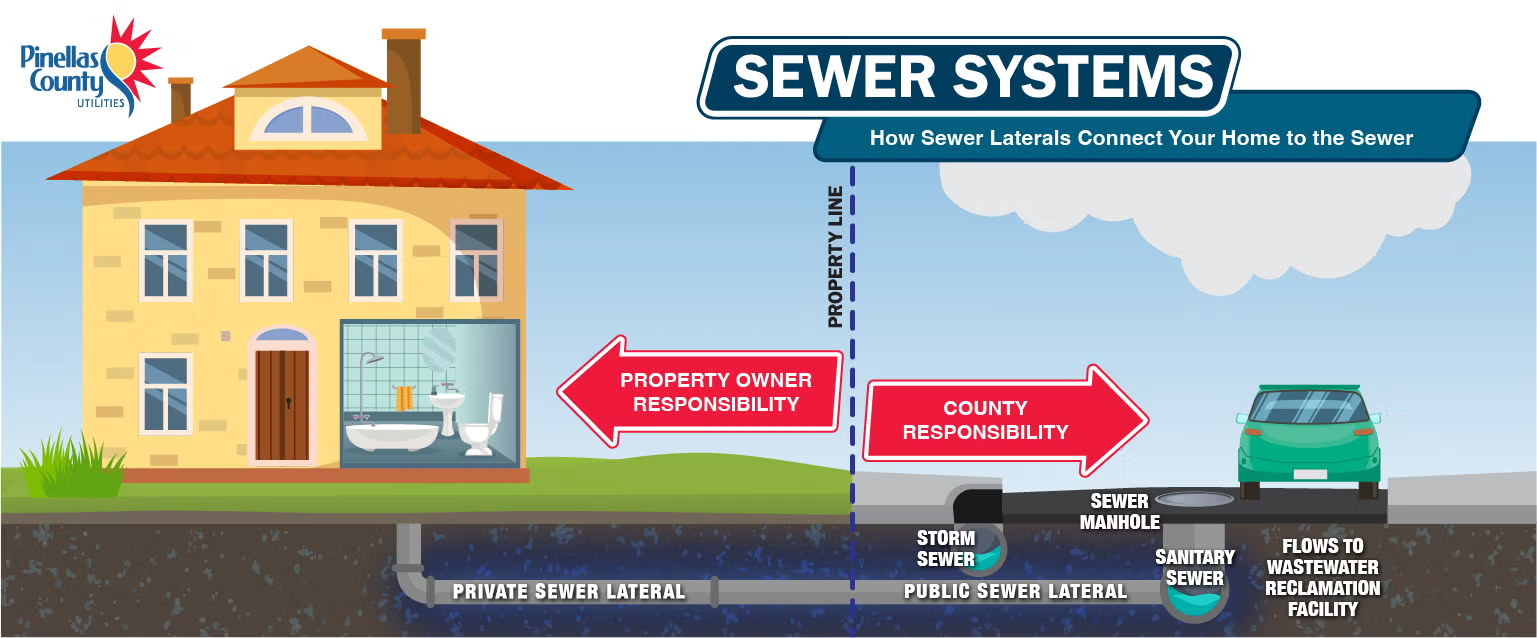
  • Lateral Line (Private Side): This is the pipe that connects a home’s plumbing to the City’s sewer system. It runs from the house to the edge of the homeowner’s property and continues to where it connects with the City’s infrastructure.
  • Lateral Line (Public Side): Once the lateral line crosses into the public right-of-way—whether that’s an easement, alley, or under the street—it becomes the City’s responsibility.
  • Main Sewer Line: This is the large pipe that collects wastewater from multiple homes and businesses and transports it to the City’s treatment facility. The City is fully responsible for maintaining and repairing the main line.

How Sewer Laterals Connects Your Home to the Sewer

Homeowner vs. City Responsibility

Despite what the City may claim when denying a sewer backup or damage claim, Oklahoma law is clear:

  • Homeowners are responsible for the lateral line on their property. This means that if a blockage or break occurs in the portion of the lateral that is within the homeowner’s yard, driveway, or under their house, the homeowner must pay for repairs.
  • The City is responsible for the lateral line in the easement or under the street. Once the lateral extends beyond private property into a public right-of-way, the City must maintain and repair it. This also means that if a blockage occurs in this section, the City—not the homeowner—is responsible.
  • The City is responsible for the main collection line. Any damage or blockage in the main sewer line falls squarely on the City.

Why This Matters:

Many homeowners assume that if sewage backs up into their home, the City will take care of the problem. Unfortunately, Cities frequently deny responsibility, even when the issue is in the portion of the lateral they are legally required to maintain. This can leave homeowners fighting an uphill battle to get their damages covered.

If you experience a sewer backup, it’s important to investigate the cause. A professional plumber can use a camera inspection to determine whether the issue is in your private lateral or the public section. If the blockage is in the City’s portion, you may have legal grounds to seek compensation for damages.

At Oklahoma Sewer Lawyers we help homeowners hold Cities accountable when they neglect their responsibilities. If you’ve experienced a sewer backup and believe the City is at fault, contact us to discuss your legal options.

Office Phone: (405)-604-5577

Email: oksewerlawyers@gmail.com

https://sewerlawyers.com/wp-content/uploads/2026/07/Revised-PCSW_Sewer-Lateral-Lines-7_6_22.avif 638 1537 Kneely Buxton https://sewerlawyers.wpengine.com/wp-content/uploads/2022/09/265942136_1500923250291212_5401206537950737396_n-e1663788876790.png Kneely Buxton2026-07-01 15:47:492026-07-01 15:47:39Know The Risks: How Does A Sewer Line Actually Work?

Sewer Education: How Sewer Laterals Connect Your Home to the Sewer

March 13, 2025/in Sewer Education/by Jim Buxton

graphic ab0ut sewer systems

Understanding Sewer Collection Systems: Who’s Responsible for What?

Sewer backups are more than just an inconvenience—they can cause extensive damage to homes and create serious health hazards. Unfortunately, when these incidents occur, many homeowners are left wondering who is responsible for fixing the problem. Cities and municipalities often deny liability, shifting the burden onto homeowners, even when the law says otherwise.

In Oklahoma, the legal responsibility for sewer lines is divided between homeowners and the City. However, there is often confusion—sometimes intentional—about where the City’s responsibility begins and ends. Let’s break down how a sewer collection system works and clarify who is responsible for what.

How a Sewer Collection System Works:

A sewer collection system is designed to carry wastewater from homes and businesses to a treatment facility. The system consists of several key components:

  • Lateral Line (Private Side): This is the pipe that connects a home’s plumbing to the City’s sewer system. It runs from the house to the edge of the homeowner’s property and continues to where it connects with the City’s infrastructure.
  • Lateral Line (Public Side): Once the lateral line crosses into the public right-of-way—whether that’s an easement, alley, or under the street—it becomes the City’s responsibility.
  • Main Sewer Line: This is the large pipe that collects wastewater from multiple homes and businesses and transports it to the City’s treatment facility. The City is fully responsible for maintaining and repairing the main line.

Homeowner vs. City Responsibility

Despite what the City may claim when denying a sewer backup or damage claim, Oklahoma law is clear:

  • Homeowners are responsible for the lateral line on their property. This means that if a blockage or break occurs in the portion of the lateral that is within the homeowner’s yard, driveway, or under their house, the homeowner must pay for repairs.
  • The City is responsible for the lateral line in the easement or under the street. Once the lateral extends beyond private property into a public right-of-way, the City must maintain and repair it. This also means that if a blockage occurs in this section, the City—not the homeowner—is responsible.
  • The City is responsible for the main collection line. Any damage or blockage in the main sewer line falls squarely on the City.

Why This Matters:

Many homeowners assume that if sewage backs up into their home, the City will take care of the problem. Unfortunately, Cities frequently deny responsibility, even when the issue is in the portion of the lateral they are legally required to maintain. This can leave homeowners fighting an uphill battle to get their damages covered.

If you experience a sewer backup, it’s important to investigate the cause. A professional plumber can use a camera inspection to determine whether the issue is in your private lateral or the public section. If the blockage is in the City’s portion, you may have legal grounds to seek compensation for damages.

At Oklahoma Sewer Lawyers we help homeowners hold Cities accountable when they neglect their responsibilities. If you’ve experienced a sewer backup and believe the City is at fault, contact us to discuss your legal options.

https://sewerlawyers.wpengine.com/wp-content/uploads/2022/09/265942136_1500923250291212_5401206537950737396_n-e1663788876790.png 0 0 Jim Buxton https://sewerlawyers.wpengine.com/wp-content/uploads/2022/09/265942136_1500923250291212_5401206537950737396_n-e1663788876790.png Jim Buxton2025-03-13 14:21:182025-03-13 14:25:19Sewer Education: How Sewer Laterals Connect Your Home to the Sewer

Sewer Education: What Should My City Be Doing To Prevent Sewer Backups?

September 28, 2020/in Sewer Education/by Jim Buxton

What Should Cities Be Doing to Prevent Sewer Backups?

When most people think about a sewer backup, they picture the aftermath: sewage in the home, ruined floors, damaged furniture, and the overwhelming task of cleaning up. But what many homeowners don’t realize is that many sewer backups are preventable.

Cities and municipalities are responsible for maintaining the public sewer systems that serve their communities. While no sewer system is perfect, proper maintenance and routine inspections can significantly reduce the risk of sewage backing up into homes and businesses.

So, what should your city be doing to help prevent sewer backups?

1. Invest in Preventative Maintenance

The best way to prevent a sewer backup is to stop it before it happens.

According to the Oklahoma Department of Environmental Quality (DEQ), an effective preventative maintenance program can prevent up to 85% of sanitary sewer blockages. Instead of waiting until a line becomes clogged or a neighborhood experiences repeated backups, municipalities should have a routine maintenance schedule designed to identify and fix problems before they become emergencies.

Preventative maintenance often includes:

  • Cleaning sewer mains on a regular schedule
  • Removing grease, roots, and debris from sewer lines
  • Inspecting known problem areas more frequently
  • Keeping detailed maintenance records
  • Repairing damaged sewer lines before they fail

Unfortunately, many municipalities rely on reactive maintenance—responding only after something goes wrong. By then, homeowners may already be dealing with extensive property damage.

2. Regularly Monitor Sewer System Performance

A city can’t fix problems it doesn’t know about.

Routine monitoring allows sewer operators to identify restrictions, blockages, and unusual flow patterns before sewage backs up into homes.

One common method is checking manholes throughout the sewer system to compare normal flow levels. Operators sometimes refer to this as “popping manholes.” If one manhole is nearly empty while the next upstream manhole is full, it may signal a blockage that should be addressed immediately.

Lift stations and wastewater treatment facilities should also be equipped with functioning flow monitors that track changes in the amount of sewage moving through the system. Monitoring this data over time helps operators recognize developing problems long before they become emergencies.

3. Replace Aging Sewer Infrastructure

Sewer systems don’t last forever.

Many sewer lines currently serving Oklahoma communities were installed decades ago. Over time, pipes crack, joints separate, tree roots invade sewer mains, and equipment wears out.

Municipalities should have long-term replacement plans that account for aging infrastructure instead of waiting for a catastrophic failure. Replacing sewer mains, pumps, lift stations, and other critical equipment before they fail is often far less expensive than responding to repeated sewer backups and emergency repairs.

4. Conduct Routine Sewer Inspections

Modern technology gives municipalities several ways to inspect sewer systems before problems become visible.

Regular Sanitary Sewer Evaluation Studies (SSES) can identify cracks, collapsed pipes, root intrusion, inflow and infiltration, and developing blockages.

Some of the most effective inspection methods include:

  • Dye testing to identify flow problems and hidden blockages.
  • Smoke testing to locate cracks and openings where groundwater enters the sewer system.
  • CCTV camera inspections that allow operators to visually inspect sewer lines for damage.
  • SL-RAT (Sewer Line Rapid Assessment Tool) technology, which uses acoustic signals to quickly identify restricted sewer lines before a backup occurs.

Using these tools as part of a scheduled maintenance program allows municipalities to identify problems early instead of waiting until someone’s home is flooded with sewage.

Prevention Is Always Better Than Cleanup

Sewer backups rarely happen without warning. In many cases, blocked lines, deteriorating infrastructure, or maintenance issues develop over months—or even years—before sewage enters someone’s home.

While no city can prevent every sewer backup, routine maintenance, regular inspections, infrastructure improvements, and proactive planning can dramatically reduce the risk.

When municipalities fail to take these steps, homeowners are often left dealing with expensive repairs, damaged belongings, temporary housing, and significant disruption to their lives.

Has Your Home Been Damaged by a Sewer Backup?

If your home has experienced a sewer backup that you believe may have been caused by a city’s negligence, you may have legal rights under Oklahoma law.

At Oklahoma Sewer Lawyers, we’ve spent more than a decade representing homeowners across Oklahoma whose homes have been damaged by failing municipal sewer systems. We’ll review your case, answer your questions, and explain your legal options during a free consultation.

If you’re unsure whether you have a claim, we’re here to help

https://sewerlawyers.wpengine.com/wp-content/uploads/2022/09/265942136_1500923250291212_5401206537950737396_n-e1663788876790.png 0 0 Jim Buxton https://sewerlawyers.wpengine.com/wp-content/uploads/2022/09/265942136_1500923250291212_5401206537950737396_n-e1663788876790.png Jim Buxton2020-09-28 15:09:322025-03-13 14:11:20Sewer Education: What Should My City Be Doing To Prevent Sewer Backups?

Effects of Sewage Pollution on Humans

September 18, 2020/in Sewer Education/by Jim Buxton
  • Oral – drinking contaminated water or eating contaminated seafood
  • Dermal – getting contaminated water on your skin and in open cuts or rashes
  • Aerosol – inhaling water droplets such as those from breaking waves.

When toxic substances enter a body of water, they will be dissolved, become suspended in water or get deposited on the bed of the water body. The resulting water pollution causes the quality of the water to deteriorate and affects aquatic ecosystems. Pollutants can also seep down and effect groundwater deposits. Pollutants enter groundwater, rivers, and other water bodies. Such water, which ultimately ends up in our households, is often highly contaminated and can carry disease-causing microbes.

Domestic Sewage?

Domestic Sewage originates primarily from kitchen,bathroom, and laundry sources. Waste from food preparation, dishwashing, garbage-grinding, toilets, baths, showers, and sinks.

Why is Domestic Sewage a Problem?

Domestic sewage contains a wide variety of dissolved and suspended impurities. It amounts to a very small fraction of the sewage by weight, but it is large by volume and contains impurities such as organic materials and plant nutrients that tend to rot. The main organic materials are food and vegetable wastes. Plant nutrients come from chemical soaps, washing powders, etc. Domestic sewage is also very likely to contain disease-causing microbes. The various substances that we use for keeping our houses clean add to water pollution because they contain harmful chemicals. Most detergents and washing powders contain phosphates which are used to soften the water, among other things. These and other chemicals contained in washing powders affect the health of all forms of life in the water.

When sewage enters a lake or stream, microorganisms begin to decompose the organic materials. Oxygen is consumed as micro-organisms use it in their metabolism.

What can we do?

Dispose of grease and fats with your trash, not down the drain. Even if you run it through a garbage disposal, grease in drains can collect and harden into a plug.

Plant trees and large shrubs away from sewer lines. Roots grow toward breaks or cracks in lines. When roots get inside the pipe, they clog it.

Never connect sump pumps, french drains or other flood control systems to your sanitary sewer. It’s illegal and the debris and silt will clog your line. Call a plumber to undo illegal connections.

https://sewerlawyers.com/wp-content/uploads/2022/09/JIM-1-Small.jpeg 320 193 Jim Buxton https://sewerlawyers.wpengine.com/wp-content/uploads/2022/09/265942136_1500923250291212_5401206537950737396_n-e1663788876790.png Jim Buxton2020-09-18 17:04:092023-11-15 14:44:06Effects of Sewage Pollution on Humans

Health Effects of Breathing in Raw Sewage

September 18, 2020/in Sewer Education/by Jim Buxton

“Raw sewage can be a serious health risk particularly if it enters drinking water or even water that is used for fishing and swimming. The pathogens related to untreated sewage are bacteria, parasites and viruses that are most commonly associated with acute illnesses like diarrhea. However, there is one virus that can cause an acute respiratory illness which are the adenoviruses (but they are also associated with illnesses such as gastroenteritis, conjunctivitis and rash illness).

The symptoms of respiratory illness caused by the adenovirus from untreated sewage can range from the common cold to pneumonia, croup and bronchitis. Those persons with compromised immune systems could be at serious risk of complications related to the adenovirus. If one is also in a condition of stress and overcrowding, he/she can develop acute respiratory disease (ARD). Some adenoviruses, like Adv36 (AD-36) may be associated with causing obesity.”

Top 10 Health Risks of Sewage Damage Exposure

Sewage damage is one of the most dangerous, and most costly, catastrophes that can happen to a home or business owner. Most people do not realize how dangerous exposure to sewage contamination can be to their family or colleagues.

Below is a list of pathogens and allergens that fester in sewage waste. Each danger is accompanied by its symptom in an attempt to educate property owners on the potential dangers of contamination.


Bacteria

Usually single-celled, parasitic life forms microscopic in size. Most genera cause decay, fermentation and disease. Below is a list of common bacteria found in raw sewage.

Campylobacter jejuni

A microaerophilic bacteria known as one of, if not the most, common cause of gastroenteritis. Long-term effects include could arthritis and Guillain-Barre Syndrome (GBS) if not treated immediately.
*Guillain-Barre Syndrome is a disorder affecting the peripheral nervous system, causing ascending paralysis.

(Escherichia coli) E. coli

A Gram-negative bacterium commonly found in the lower intestine. Symptoms bloody diarrhea, fever, nausea, and vomiting.

Salmonella

A Gram-negative bacterium known to survive without the need of a host. This makes salmonella one of the more threatening genera of bacteria in raw sewage. Sufferers could experience symptoms of gastroenteritis, typhoid fever, paratyphoid fever and other common ails of food poisoning.


Viruses

Adenoviruses

Cause respiratory infections like pneumonia, croup and bronchitis. Also known to cause severe eye infections.

HPV (human papillomavirus)

Normally knows as a sexually transmitted disease (STD), HPV can also infect humans when exposed to raw sewage. Along with wart growth, HPV is known to cause cervical, anal and genital cancer.

Norwalk Viru

Known to cause 90% of the world’s non-bacterial gastroenteritis outbreaks.

Rotavirus

This viral strain can cause severe diarrhea and high fevers.


Parasites

Cryptosporidium

A protozoan parasite which causes Cryptosporidiosis. “Crypto” causes severe diarrhea in people with healthy immune systems. Immune Deficient patients’ symptoms are far worse and often fatal.

Giardia

An anaerobic flagellated protozoan parasite that colonizes in the small intestines. Symptoms included acute gas, severe diarrhea, dehydration, vitamin malabsorption and chronic weight loss.

Roundworm (Ascaris lumbricoides)

Parasite caused disease known as Ascariasis while blocking the intestinal track. Causes visceral damage, peritonitis and inflammation of the body. Malabsorption will degenerate into malnutrition and anorexia in the infected individual.

Tapeworm (Helmiths worm)

Tapeworm actually feeds on intestinal track. Risks include vitamin deficiencies, fatigue, weight loss and, in extreme cases, severe neurological damage (ie. Seizures)

https://sewerlawyers.com/wp-content/uploads/2022/09/JIM-1-Small.jpeg 320 193 Jim Buxton https://sewerlawyers.wpengine.com/wp-content/uploads/2022/09/265942136_1500923250291212_5401206537950737396_n-e1663788876790.png Jim Buxton2020-09-18 15:32:182023-11-15 14:44:06Health Effects of Breathing in Raw Sewage

Sewer Education: What Causes A Sewer Backup Anyway?

September 1, 2020/in Sewer Education/by Jim Buxton

If your house has been flooded with sewage you may be wondering, how did this even happen? What actually causes a sewer backup anyway?

If this has happened to you, you are not alone. Fortunately, there is a path to reclaiming your home and your peace of mind.

It is called the Oklahoma Governmental Tort Claims Act. 1 The “GTCA” was created by, you guessed it, the Oklahoma government in order to “(1) to promote prompt investigations, (2) to provide early opportunity for correction of dangerous conditions, (3) to promote speedy and amicable settlements of claims and (4) to permit the governmental entity to prepare for fiscal consequences.” Sounds good, right?

As we all know, dealing with any government comes with obstacles. The GTCA is no different, but Oklahoma Sewer Lawyers has been navigating through these hurdles on behalf of our clients for over a decade. This article explains some of the ways a municipality can prevent their sewer system from backing up and flooding homes and businesses before a problem arises. This should not serve as legal advice, but as a general guide for sewer backup victims. For more in-depth information or for a case review, contact our office:

Office Phone: (405)-604-5577

Email: oksewerlawyers@gmail.com

“What causes a sewer backup anyway?”

“My house is flooded with sewage, but how? I wasn’t even using the plumbing fixtures in my house, yet hundreds of gallons of raw sewage came right up and onto my floors, walls and furniture.” If you are like so many other Oklahomans that have experienced a sewer backup, these questions may be going through your mind.

Buried deep beneath our homes, streets, even under our courthouses, is the infrastructure of a modern society. Going back as far as the ancient Romans, there has been some sort of sewer, what we today call the sanitary sewer system. It’s a pretty simple system: it is gravity fed, it carries everything we and our neighbors put down the commode, the tub, the washing machines, the sink. It takes that all away from homes and to a place where it is safe. It’s out of sight, out of mind. Governments build them and charge their residents to use them.

Municipalities are bound to use reasonable diligence and care to see that the sewer system is not clogged and is liable for negligence in the performance of such duty to a sewer backup victim after reasonable notice of the clogged condition of such sewer. This is called the “standard of care”. That standard encompasses a plethora of problems that can occur at any given time in a sanitary sewer system and requires municipalities to prevent them from occurring.

51 O.S. §§ 151 et al.
Calvert v. Tulsa Pub. Schools, Indep. Sch. Dist. No. 1 of Tulsa County, 1996 OK 106, ¶ 19.

Common Causes of Clogs:

More often than not, a clog in the city’s main sewer line is caused by roots, grease or a combination of the two. At its most basic and disgusting level, a sewer system is a damp, nutrient-rich environment for plants (think cattle manure for plant fertilizer). These roots will turn into “root balls” that look like a steel wool sponge throughout the diameter of the main line. Where roots have grown once they will grow again, year after year, because of the holes created by the initial root growth. And, because municipalities often use a high-pressure water jet to cut the roots, the don’t actually kill it. This makes it grow back thicker and fuller in the next growth cycle.

Grease can accumulate in the main lines of the sanitary sewer system in many ways. Fecal matter contains grease. Some people rinse their Saturday morning bacon grease down the sink. In areas of town where there are restaurants with inadequate grease traps, it can enter into the main lines. All of these will create a sort of “plug” that is nearly impossible to penetrate and, because grease and water don’t mix, will not wash away easily. Instead, it will cling to the sides of the main line pipe, much like cholesterol in an artery, until it constricts the flow so much that it stops.

Municipal governments and their public utilities department know about these things. Their employees are trained on this stuff before they are even allowed to work for the city. The Department of Environmental Quality, or DEQ, mandates that wastewater operators be licensed by the DEQ before they can perform certain tasks, with levels from “D” all the way up to “A” licensees.

Oklahoma City v. Romano, 1967 OK 191, ¶ 9, citing City of Holdenville v. Griggs, 1966 OK 34.

One form of treatment for roots and/or grease is chemicals. The municipality should be placing some form of chemical treatment, such as copper sulfate or a degreaser, to kill roots and break up grease. The municipality should also have a schedule for jetting or rodding, a type of high-pressure hydraulic cleaning that washes the interior walls of the main line to sweep away grease and other debris and cut roots.

This maintenance should not be done only once a backup occurs, but repeatedly, and far in advance of any warning signs of a potential backup. This is called preventative maintenance, which the DEQ states can prevent up to 85% of sanitary sewer blockages. It includes studies to test the integrity of the system, as well as chemical and mechanical treatments. Sadly, most municipalities do not have a preventative maintenance program in place, leading to reactive maintenance at best and a system with problems that the operator cannot keep up with. The system is a ticking time bomb at that point.

Inflow & Infiltration, Deterioration, and More:

Inflow and infiltration, or “I & I”, is stormwater and groundwater that enters the sanitary sewer system, overloading it and causing it to surcharge. There is only one place for sewage to go from there: residences and businesses connected to the line. The term “sanitary sewer system” is important to note, because unlike a combined system (which are not found in Oklahoma and actually illegal), the rain and groundwater are not supposed to get in. “Sanitary” is an ironic term for the sewer, but it means that it is designed to carry wastewater only. When it has cracks and holes in the system, from deterioration or roots or just poor maintenance, inflow and infiltration can cause catastrophic sewer backup damages.

There are three basic types of materials that sewer lines are composed of. The cast iron pipe of the olden days, the vitrified clay pipe of the 50’s and 60’s, and the modern polyvinyl chloride or “PVC” pipes of today. Many sewer systems in Oklahoma are so outdated that cast iron and clay pipes account for the majority of the sewer system, especially in older neighborhoods. All of these have their weaknesses. Iron rusts and cracks with temperature changes over time. Main lines made of clay have “joints” of pipe that are the shortest of the bunch, typically ten feet or less. Roots, cracks, and catastrophic failure from heavy equipment crushing the clay pipe are more likely to occur at the connection between two joints.

Municipalities, and everyone else with common sense, recognize that most things are not designed to last forever. Sanitary sewer main lines have a life of up to fifty years before they deteriorate so badly that they crack and collapse. Yet, most municipalities have not replaced sewer lines since they were installed decades ago. In older parts of town, the system could be as old as the town itself. Sure, it costs money to fix it, but financial and technical assistance from government and insurance agencies that are more than willing to help, and actually offer grants and money-match programs to get the job done, are not utilized until it is too late.

Oklahoma Sewer Lawyers has represented sewer backup victims for more than a decade. Our knowledge of the GTCA, our trial experience and expertise, and our comprehensive understanding of sanitary sewer systems allows us to provide our clients with aggressive representation that is second to none. If you find yourself in need of legal representation for a sewer backup matter, we are happy to discuss and review your case without charge.

For more information, check out some of our other articles on sewer backup litigation or give us a call.

We’re here to help.

https://sewerlawyers.wpengine.com/wp-content/uploads/2022/09/265942136_1500923250291212_5401206537950737396_n-e1663788876790.png 0 0 Jim Buxton https://sewerlawyers.wpengine.com/wp-content/uploads/2022/09/265942136_1500923250291212_5401206537950737396_n-e1663788876790.png Jim Buxton2020-09-01 15:03:262022-09-23 15:36:49Sewer Education: What Causes A Sewer Backup Anyway?

Search Blog Posts

Search Search

Categories

  • Client Success Stories (18)
  • Firm News (2)
  • Know The Laws (9)
  • Media Coverage (2)
  • Protect Yourself (8)
  • Sewer Education (8)

Tags

#1LawyerInThe2Business (30) #ClientSuccessStory (9) #ClientSucessStory (1) #Community (1) #FirmNews (2) #GiveBack (1) #KnowTheLaws (6) #KnowTheRisks (2) #MediaCoverage (1) #Oklahoma (2) #OklahomaSewerLawyers (32) #OurCaseHistory (1) #ProtectYourself (7) #SewageFacts (1) #SewageLaw (1) #SewerBackup (3) #SewerSystemEducation (4) Client Testimonial (7) Law Center (8)

Subscribe to Blog via Email

Enter your email address to subscribe to this blog and receive notifications of new posts by email.

Follow us on Facebook


OKLAHOMA CITY OFFICE

511 Couch Drive, 3rd Floor

Oklahoma City, OK 73102


PHONE & FAX

Toll Free: 1-888-2-OKSEWER

Fax: (405) 604-5578

JIM (3)
© Copyright - Sewer Lawyer - Enfold WordPress Theme by Kriesi
  • Link to Facebook
  • Link to LinkedIn
  • Do I Have A Case
  • Law Center
  • Contact
  • Buxton Trial Lawyers
Scroll to top Scroll to top Scroll to top